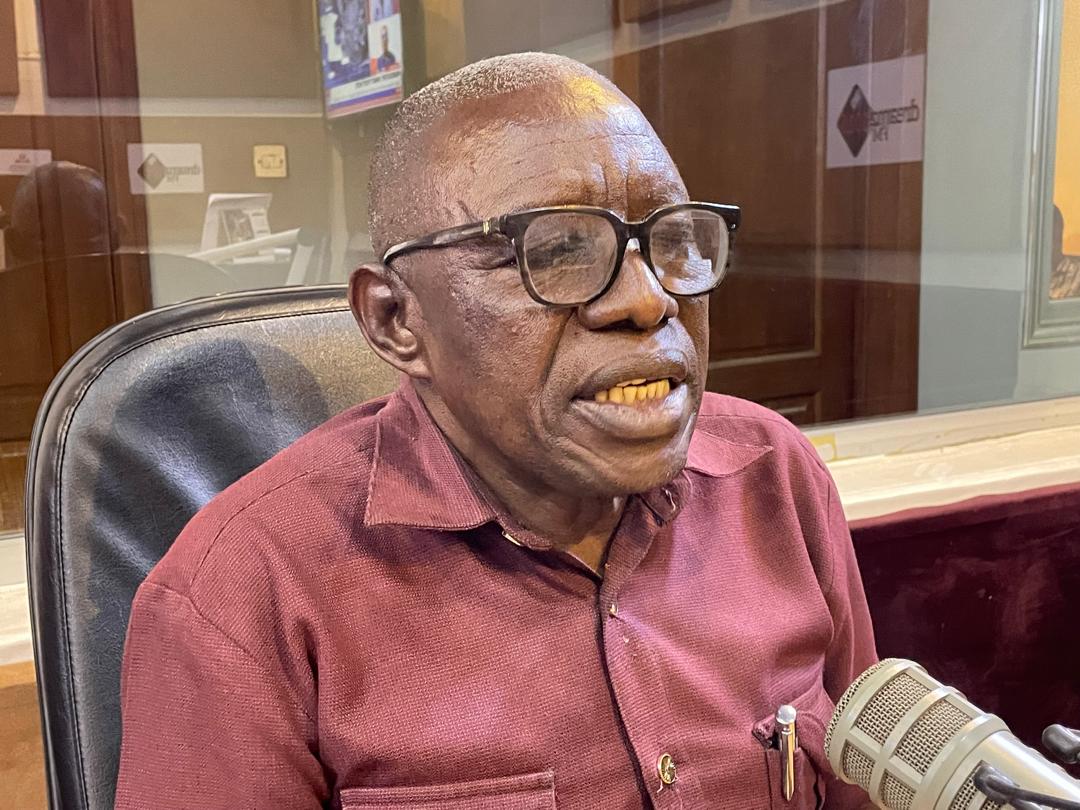
Former Upper East Regional Minister Professor Avea Nsoh has urged government to prioritize the recruitment of trained teachers, arguing that economic policies focused heavily on macroeconomic targets are undermining Ghana’s education system.
Speaking on Dreamz FM’s Breakfast Today, Prof. Nsoh said thousands of qualified teachers remain unemployed while schools across the country continue to face staffing shortages.
“Government has the capacity,” he said. “We keep focusing on macroeconomic indicators and forgetting citizen interests.”
According to him, the persistence of unqualified teachers in schools was initially caused by shortages of trained personnel in earlier decades.
“At the time, we did not have enough trained teachers, so government had no option but to recruit pupil teachers,” he explained.
He noted that successive governments later expanded teacher education programs through colleges of education and universities to increase the supply of qualified teachers.
However, he said current economic policies influenced by international financial institutions have limited public sector recruitment.
“We have trained teachers in communities without jobs, while schools in the same communities do not have enough teachers,” he said.
Prof. Nsoh criticized what he described as an overreliance on International Monetary Fund-inspired fiscal policies, saying they prevent governments from making aggressive investments in education and employment.
“If you keep focusing only on GDP, inflation and other macroeconomic indicators, you forget what matters to the people,” he said.
He compared Ghana’s situation with countries such as China and the United States, arguing that governments elsewhere continue to invest heavily in their economies despite debt burdens.
“The money generated in the system must be recycled into the system to grow,” he said.
The former minister also defended the historical use of untrained teachers, explaining that Ghana’s education sector once lacked enough professional teachers to meet demand.
He cited programs introduced under previous administrations to train pupil teachers while they remained in service.
“Government made efforts to ensure no classroom was left without a teacher,” he said.
Prof. Nsoh further questioned why private schools continue to employ untrained teachers when qualified graduates are available.
He accused some private school operators of prioritizing profit over quality education.
“They leave trained teachers unemployed and recruit SHS graduates to teach because they are cheaper,” he said.
The academic maintained that stronger regulation and increased investment in education are necessary to improve learning outcomes.
He urged policymakers to adopt what he described as “radical budgeting” to absorb more trained teachers into the education sector.
“We should focus on the welfare of citizens and the future of our children,” he said.