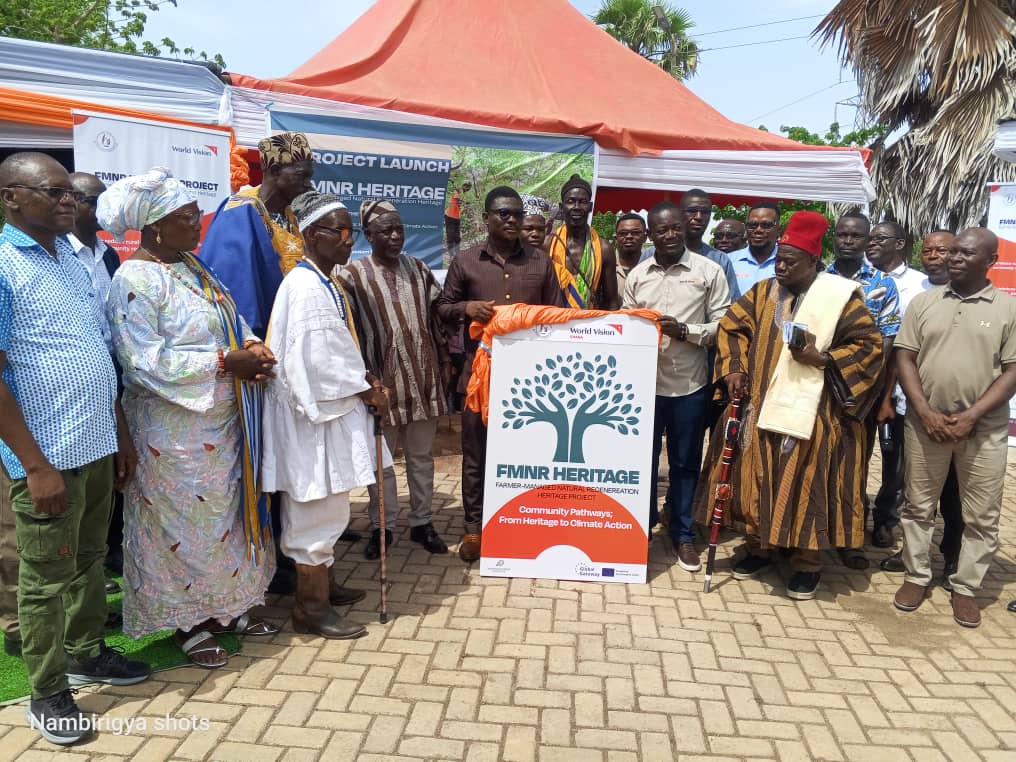
World Vision Ghana, a Christian relief, development and advocacy organization is hoping to restore 1,500 hectares of land with a Farmer Managed Natural Regeneration Project in the Nabdam District of the Upper East Region.
The project which is expected to last 2 years, targets 10,000 farmers and is aimed at sustaining and building a climate resilient Nabdam District by strengthening landscape governance structures, using nature-based, community-led approaches that integrate and revive traditional ecological knowledge and cultural heritage systems.
FMNR is the Systematic regeneration, management, and maintenance of farmer-selected trees and shrubs: living stumps, root sprouts, or seeds that already exist in the soil; it is characterized as a low-cost, simple way for farmers to increase the number of trees interplanted with annual crops in the fields.
Farmer Managed Natural Regeneration (FMNR) comprises a set of practices used by farmers to encourage the growth of native trees on agricultural land. FMNR is widely acclaimed to ensure a number of positive impacts, including increasing agricultural productivity through soil fertility improvement and feed for livestock, incomes, and other environmental benefits.
This approach is widely embraced in Africa as a cost-effective way of restoring degraded land and overcoming the challenge of low survival rates associated with tree planting in arid and semi-arid areas.
Available data suggests that 13% of Ghana’s population is affected by drought, especially in Northern Ghana, with the country losing an estimated 95 million dollars to drought.
With deforestation affecting over 315,000 hectares of farmland per year, Farmer Managed Natural Regeneration is considered a more viable option to ensure a sustainable environment
The launch of the 2-year Nabdam FMNR Heritage Project by World Vision Ghana to be implemented in collaboration with the Center for Community Development Initiative (CODI) with Funding from the European Union under the Sustainable Forest and Economic Program, implemented by the European Forest Initiative (EFI) is as a result of lessons drawn from the implementation of a similar program by World Vision Ghana between 2009 and 2020, that led to the restoration of 750 hectares of degraded lands in 57 communities in the Talensi District of the Upper East Region.
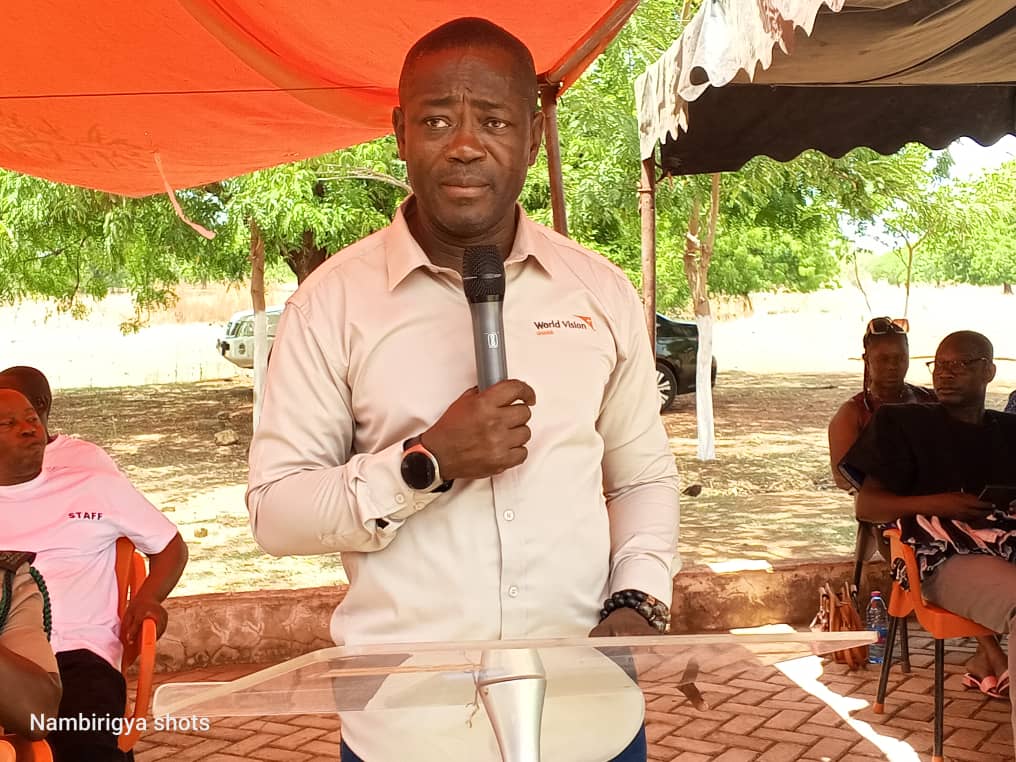
Speaking at the Launch, Josuah R. Baidoo, Strategy and Integrated Programs Director of World Vision Ghana, noted that the project seeks to revive the environment, strengthen livelihoods and protect the future of children.
He observed challenges such as land degradation, erratic rainfall and declining crop yield and eroded incomes, that places pressure on families.
“We are proud to introduce a simple yet proven solution — the Farmer Managed Natural Regeneration Heritage Project. This initiative is designed to restore 1,500 hectares of degraded lands, strengthen livelihoods, and build resilience of over 10,000 people, prioritizing women, youth, and vulnerable groups in the beneficiary communities across the district. The project will empower farmers to nurture naturally occurring tree stumps and roots to restore vegetation without costly plantations. This process knowns as FMNR will contribute to revive soil fertility, improve biodiversity, increase crop yields, and create shade and fodder for livestock. This will restore the environment, revive traditional knowledge and build community resilience. FMNR Heritage project is anchored in partnership. Together, we will ensure that FMNR is not just a project, but a movement — integrated into district development plans, supported by local leadership, and owned by the people themselves.” He explained.
Mr. Baidoo explained that the situation therefore, requires intensified efforts to revive soil fertility, improve biodiversity and build community resilience.
“FMNR HERITAGE PROJECT focuses on:Environmental restoration — bringing back trees, biodiversity, and fertile soils. Livelihood empowerment — enabling farmers to increase yields, diversify incomes, and reduce poverty. Community resilience — ensuring households can withstand climate shocks and build sustainable futures.” He stressed
As partners such as CODI, the EFI and community chiefs pledged their commitment to ensuring a successful implementation of the project, the District Chief Executive for Nabdam, Francis Tobig, recognizes the challenges residents of the district face that threaten food security and therefore, welcomes the implementation of the FMNR Heritage Project. “The project is expected to bring us a solution that is simple, cost effective and proven. As your district assembly, we pledge our full support to the implementation of the project. We will work hand in hand with traditional leaders, with partners and ensure that this project is integrated into our development plans.” He assured.