
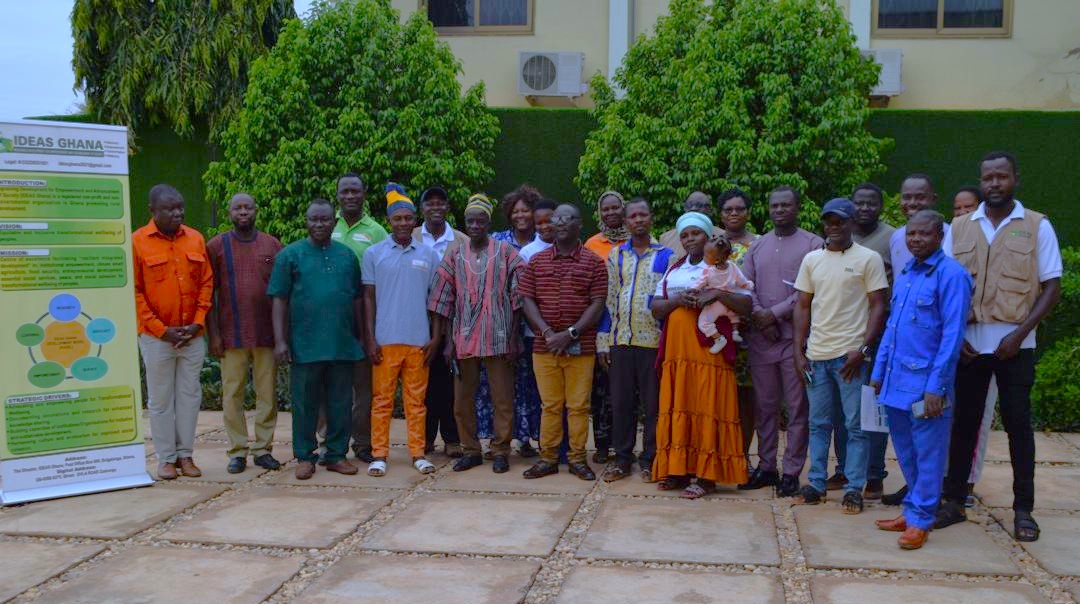
The Ingraining Development for Empowerment and Advancement of Society (IDEAS Ghana) has launched a comprehensive nutrition improvement project aimed at addressing persistent malnutrition among children and vulnerable households in the Bawku West District.
The project, dubbed Promoting Children Access to Nutritious Food (P-CAN), is a €57,000 grant initiative funded by Kindermissionswerk of Germany. The 24-month project will be implemented in five communities, Boguri, Gbere, Gozesi, Kamega, and Komaka to improve nutrition outcomes for children and strengthen household resilience.
Presenting an overview of the project during the launch ceremony, Executive Director of Ideas Ghana, Dr. Joseph Ayembilla, said the initiative is expected to contribute to improved nutrition and livelihoods in the target communities. According to him, the project aims to support 2,500 children under the age of 15 to consume fruits and vegetables regularly, enable 500 women farmers to cultivate nutrient-rich crops, and help 200 women generate income from the sale of agricultural produce.
Dr. Ayembilla explained that these results will be achieved through a range of interventions, including the training of 25 Volunteer Nutrition Counselors, capacity building for 500 mothers, including 100 teenage mothers, provision of Orange-Fleshed Sweet Potato (OFSP) vines and bean seeds, community cooking demonstrations, monthly home visits to malnourished children, and support for food marketing and contract farming.
The project is being implemented in collaboration with the Department of Agriculture and other local government stakeholders.
The launch event brought together district officials, traditional leaders, health professionals, agricultural extension officers, civil society organizations, and community representatives. The initiative seeks to strengthen household nutrition practices, empower women farmers, create sustainable income opportunities, and build stronger community resilience.Delivering the welcome address, Board Chairman of Ideas Ghana, Prof. Emmanuel Delwin Abarike, highlighted the urgent need for intervention, citing worrying nutrition indicators in the district.
“With over 44% of the population under 18 years old, the statistics are alarming: stunting affects 17.5% of children, wasting 6%, and underweight 12.3%, as reported by USAID Feed the Future in 2023. The situation worsened in 2024 with conflict and the influx of Burkinabe migrants, further straining livelihoods and essential services,” he stated.
Prof. Abarike stressed that collective action was needed to address the challenge.
“Our presence here today reflects a shared commitment: no child in this district should start life at a nutritional disadvantage,” he said.
A presentation on the malnutrition situation in Bawku West revealed that although progress has been made in maternal and child health, significant gaps remain in dietary diversity, complementary feeding practices, and access to nutrient-rich foods. The presentation further highlighted the impact of climate-related shocks and food insecurity on household nutrition.
Speaking on the broader significance of the intervention, Dr. Ayembilla noted that nutrition is central to human development.
“Nutrition is not only a health concern; it is a key driver of human development. A malnourished child today becomes a vulnerable adult tomorrow,” he emphasized.
The District Director of Health Services for Bawku West, Mr. Stephen Bordotsiah, speaking on behalf of local authorities, expressed strong support for the initiative and underscored the long-term benefits of investing in child nutrition.
“Children who are malnourished are more likely to suffer from infections, delayed development, and poor educational outcomes. Investing in nutrition is one of the most cost-effective interventions for human capital development,” he stated.
Ideas Ghana emphasized that community participation will be central to the project’s success. Under the initiative, volunteers, agricultural extension officers, and health workers will be equipped to provide nutrition education, support behaviour change, and facilitate the early identification and referral of malnourished children.
The launch of the P-CAN project marks the beginning of a coordinated, multi-sectoral effort to reduce malnutrition in Bawku West District and create a foundation for healthier families, improved livelihoods, and more resilient communities