
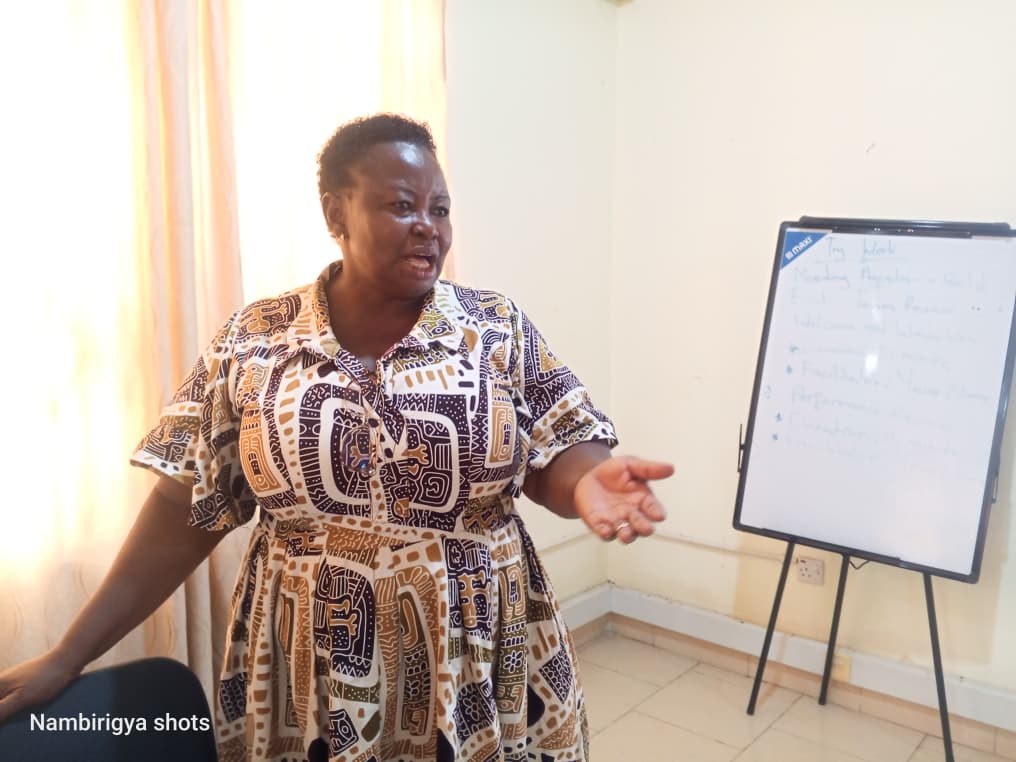
The Upper East Regional Adolescent Health Focal Person, Dora Kulariba, has identified teenage pregnancy as a major driver of child marriage in the region.
Speaking to journalists on the sidelines of community dialogue sessions aimed at engaging men and boys to strengthen awareness of gender-based violence and harmful practices, including child marriage and female genital mutilation (FGM), and to promote community advocacy for prevention and response, Madam Kulariba indicated that the majority of child marriage cases result from girls becoming pregnant.
The event was organized by the Department of Gender in the Upper East Region with support of UNDP to engage men and boys from Kassena Nankana West and Nabdam Districts.
According to her, in some cases, the girls themselves insist on marrying the men or boys who impregnated them. In other instances, parents, angered by their daughters’ pregnancies, compel them to marry those responsible.
“Currently, most of the cases of child marriage are as a result of teenage pregnancies where when a girl gets pregnant, they just give out the girl to marry because you want to be somebody’s wife that’s why you got pregnant.” She disclosed.
She expressed hope that child marriage, gender-based violence, and teenage pregnancy will no longer be regarded as normal within communities.
Madam Kulariba believes that men can play a key role in ending some of these harmful practices.
“Even though men are part of the problem, they can become more of the solution because they can become advocates in their communities regarding these harmful practices. The men have a say so if it is tailored to them and they see the importance of these things, then we will make a head way.” She stated.
She also called for a review of existing policies, proposing that the age of consent for sexual activity be raised to 18 and the legal age of marriage be increased to 20.
“If the consent to sex at the age of 16 is relooked at and is pushed to 18 and then marriage to 20 years then I think it will help because the laws of the country also influence the behavior of people.”