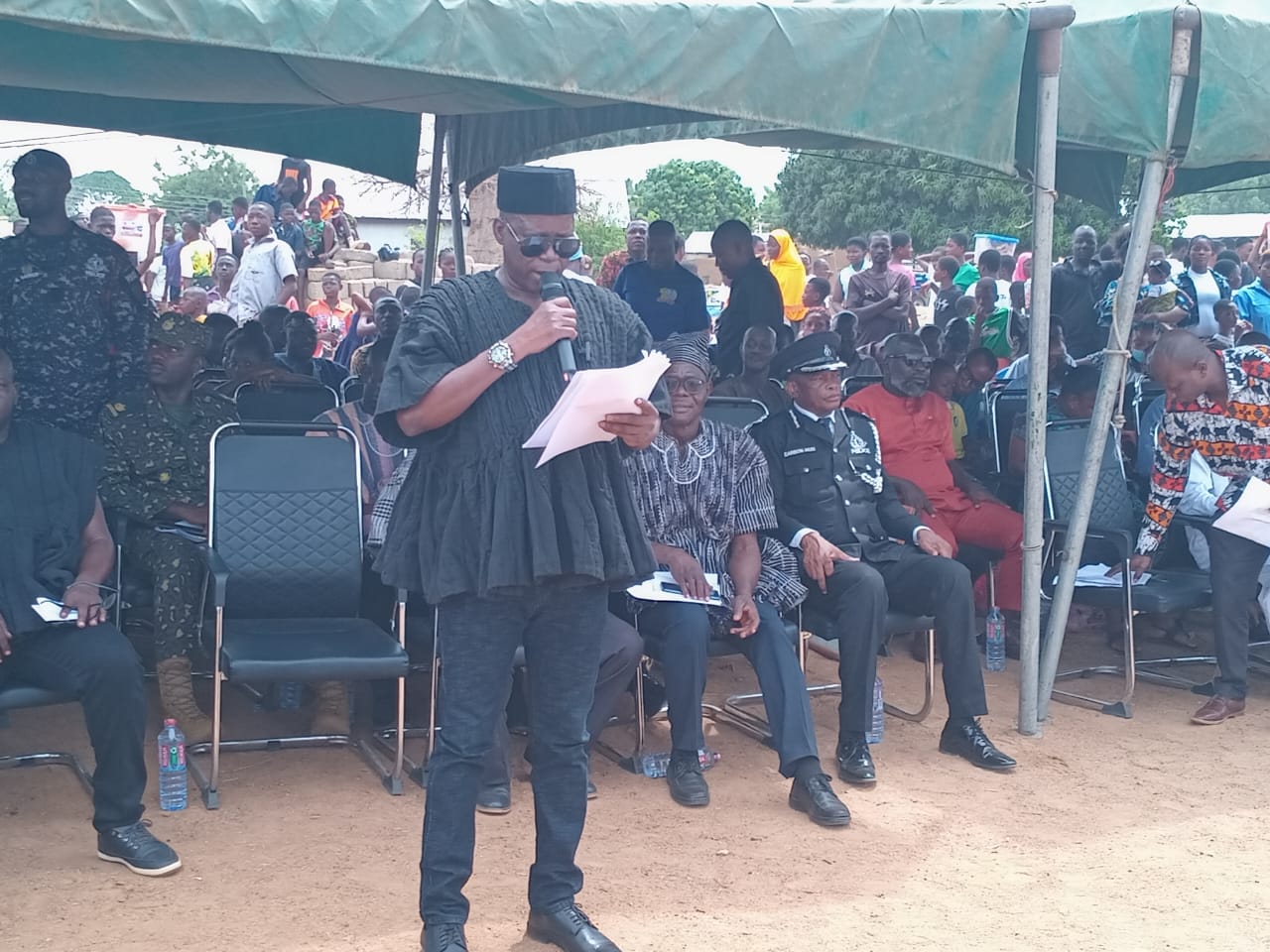
The Upper East Regional Minister, Donatus Akamugri Atanga, has urged unity and renewed commitment to national development as Ghana marks its 69th Independence Day, while paying tribute to the late Bongo District Chief Executive, Joseph Akaseke Abaa.
Speaking at the Independence Day parade in Bongo, Akamugri Atanga reflected on Ghana’s historic declaration of independence on March 6, 1957, led by the country’s founding president, Dr. Kwame Nkrumah. “On this day in 1957, the gallant sons and daughters of our land, under the leadership of our founding father, Dr. Kwame Nkrumah, proclaimed to the world that Ghana was free forever,” he said.
He noted that Nkrumah’s famous declaration that “the Black man is capable of managing his own affairs” continues to inspire generations of Ghanaians and serves as a reminder that independence was not only about political freedom but also about the determination to shape the nation’s future.
Akamugri Atanga said that although Ghana has faced challenges over the decades, the country has made notable progress in democratic governance, education, peacebuilding, and social development. “Our journey has not been without challenges, but the resilience and determination of the Ghanaian people have consistently kept our nation on the path of progress,” he said.
The minister said this year’s celebration in Bongo was marked by a moment of solemn reflection following the death of the district’s Chief Executive, Joseph Akaseke Abaa.
He described the late DCE as a dedicated public servant whose contributions to the development of the district would not be forgotten.
“On behalf of the government and the good people of the Upper East Region, I extend my heartfelt condolences to the grieving family, the assembly, and the chiefs and people of Bongo,” he said.
Akamugri Atanga acknowledged that the late DCE’s passing had created a leadership vacuum but said his legacy of humility, commitment, and service should inspire continued efforts toward community development.
He said the theme for this year’s celebration, “Building Prosperity, Restoring Hope,” reflects the aspirations of Ghanaians for economic stability, inclusive development, and renewed confidence in governance. According to him, the government under President John Dramani Mahama remains committed to strengthening the national economy and ensuring that development reaches every part of the country.
He said key government priorities include investments in education, agriculture, health, infrastructure, and social protection. “These national priorities are not merely policy statements at the national level. They are being translated into concrete development actions across the region and the country,” he said.
The minister noted that efforts are being made to improve agricultural productivity to enhance food security and farmers’ incomes while expanding access to healthcare, quality education, and essential infrastructure such as roads, potable water, and electricity.
“Our goal is to ensure that no district, no community, and indeed no citizen is left behind in Ghana’s development journey,” he said.
Akamugri Atanga also highlighted ongoing government initiatives to strengthen Ghana’s education system.
He said the government continues to support the Free Senior High School programme with dedicated funding while increasing per-child allocations at both basic and secondary school levels.
He said the improvements have enhanced the quality and quantity of meals provided in schools, while also supporting local agricultural production and improving school attendance.
According to him, the Ghana Education Trust Fund (GETFund) has awarded 94 education projects in the Upper East Region to address infrastructure deficits and help gradually phase out the double-track system.
Other interventions include the “No Fees Stress” initiative and the distribution of more than 666,807 sanitary pads to students, aimed at improving access to education and ensuring that girls remain in school. “These interventions reflect the government’s recognition that education remains the most powerful tool for empowering our young people and securing the long-term development of our nation,” he said.
The regional minister also expressed concern about rising incidents of student unrest in some senior high schools. He urged students to use dialogue rather than violence when raising concerns with school authorities. “While students may have genuine concerns, resorting to riots should never be the means of drawing attention to them,” he said.
He encouraged students to remain disciplined and focused on their education, describing them as the future leaders of the country.