Health officials and development partners in the Bulsa South District used this year’s Menstrual Hygiene Day celebrations to call for improved access to sanitary products, better school infrastructure and increased public awareness about menstrual health.
The event, observed annually on May 28, was organized with support from Afrikids Ghana and formed part of a district-wide awareness campaign that began with a radio discussion on May 27 at Radio Fumbisi.
Runaway Yahaya, a Health Promotion Officer with the Ghana Health Service and District Adolescent Coordinator for Bulsa South, said menstrual hygiene remains a critical component of adolescent health and development.
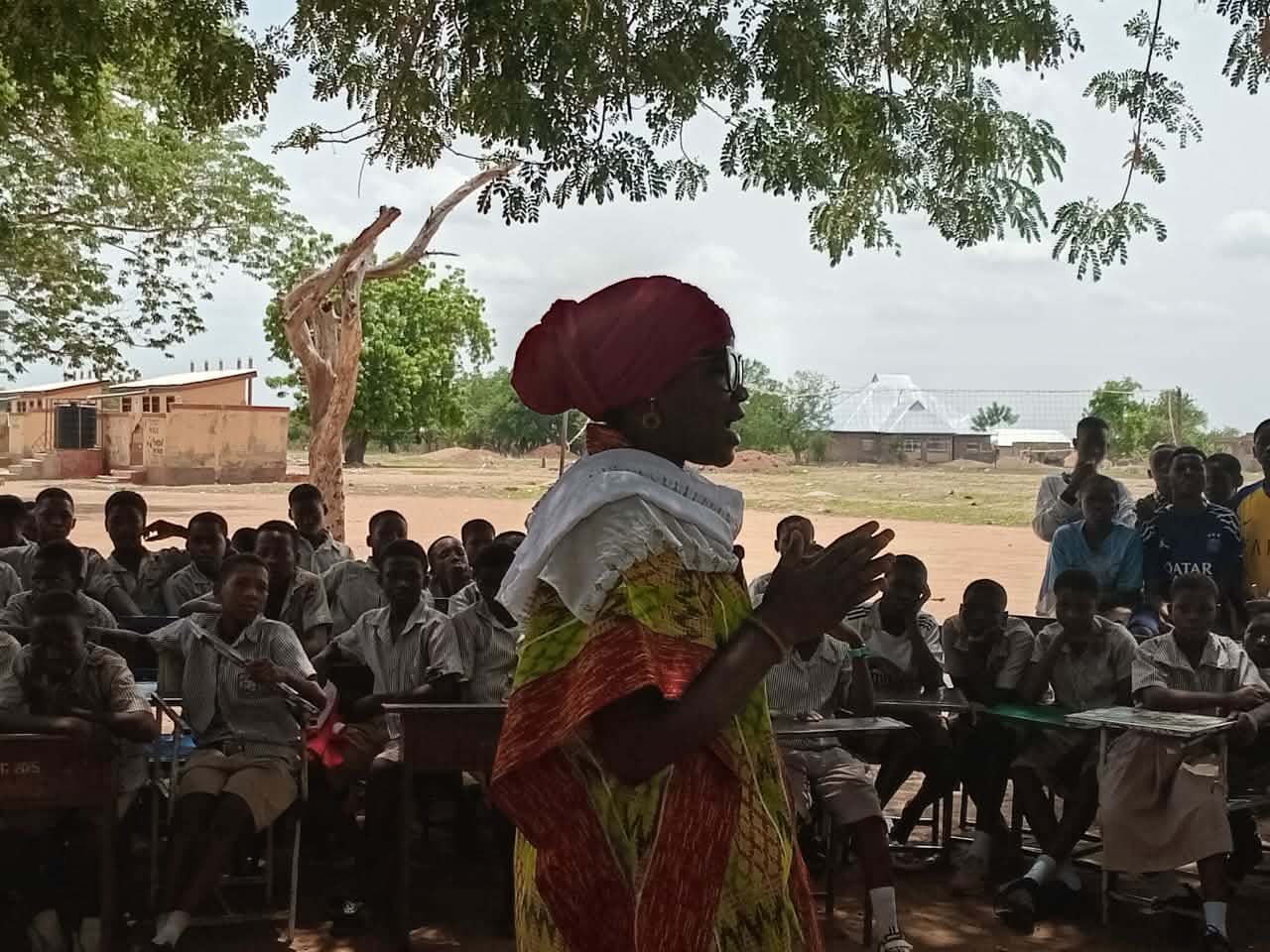
“Menstruation is a natural process, and menstrual hygiene is essential to keeping girls healthy and confident,” Yahaya said during an educational session at a local school.
She explained that poor menstrual hygiene can increase the risk of infections, including urinary tract infections and pelvic inflammatory disease, which may lead to long-term health complications if left untreated.
According to Yahaya, many girls in rural communities continue to face barriers to managing their menstrual health, including the high cost of sanitary products, limited access to supplies and inadequate facilities in schools.
“Some girls stay at home during their periods because they are afraid of staining themselves in school or because there are no suitable places to change,” he said.
Yahaya welcomed the government’s free sanitary pad initiative but noted that additional support may be needed to meet the needs of girls with heavier menstrual flows and those living in underserved communities.
She called on philanthropists, non-governmental organizations and other stakeholders to support efforts to improve menstrual hygiene facilities in schools by creating changing rooms and private spaces for girls.
The health official also advocated policies aimed at making sanitary products more affordable, arguing that menstrual hygiene products are a necessity rather than a luxury.
“We are advocating for greater support because menstruation is not a choice,” Yahaya said. “Improving access to menstrual hygiene products and facilities will help girls stay in school and participate fully in their education.”
Yahaya said the Ghana Health Service wil continue integrating menstrual health education into adolescent health programs across the district through youth-friendly health services and adolescent health corners.