
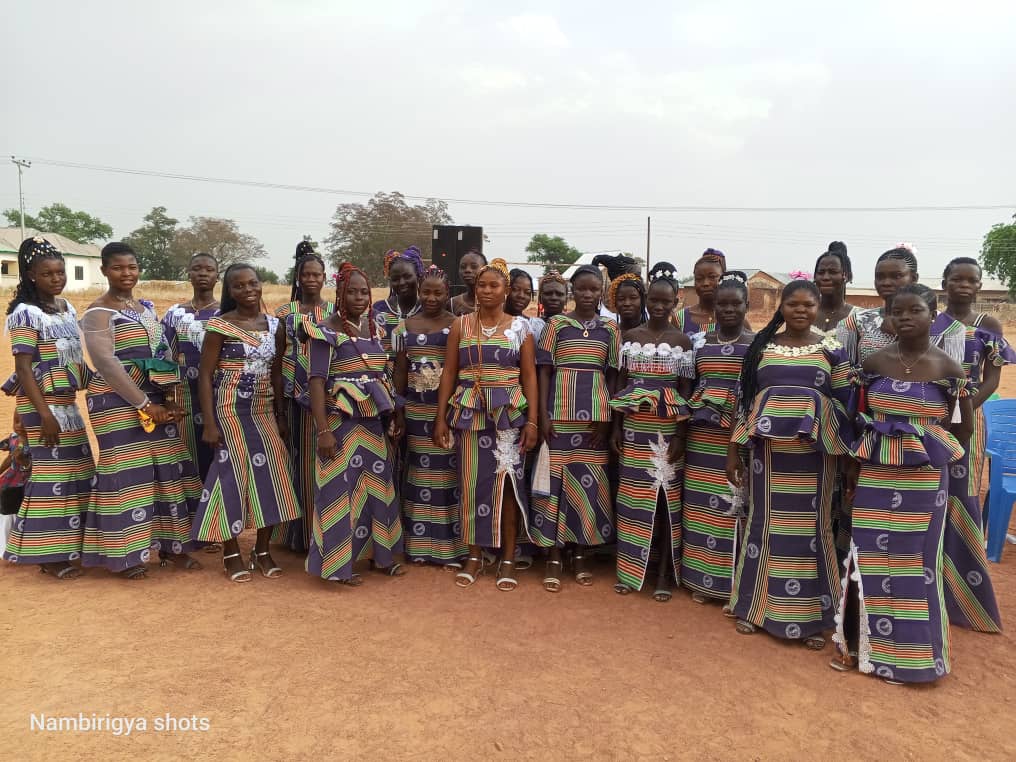
The Yorogo Textile Weavers Association has graduated 23 apprentices after an intensive three-year training programme in weaving local smock fabric. The ceremony, held over the weekend, marks the beginning of the apprentices’ transition toward their individual passing-out celebrations, which officially conclude their training.
Upon passing out, the newly trained weavers are expected to establish their own businesses and, in turn, train others—earning them the title of “madams” in the trade.
This year’s ceremony is the second since the association broke away from its parent body in Bolgatanga, the regional capital.
Speaking to Dreamz News, President of the Association, Teresah Awariya cautioned apprentices against travelling to the southern part of the country in search of menial jobs instead of building their own weaving businesses.
She noted that funds raised during the passing-out ceremonies—intended to serve as startup capital—often become sources of conflict involving relatives or spouses. According to her, these funds are meant to support the apprentices in establishing their businesses, not to create family disputes.
Madam Awariya added that in some unfortunate cases, such conflicts have led to divorce shortly after the passing-out ceremonies, a development she described as detrimental to the growth and sustainability of the weaving trade. “I would like to call on the apprentices not to abandon the work and go to Kumasi in the name of washing bowls. This is a major worry to parents and madams.
Another concern is that, some relatives or husbands always take the money from the apprentices, and this makes it difficult for them to start the work. It is because of poverty that they are into the trade. So, I would like to plead with our husbands and relatives to support our apprentices.”
She urged the apprentices to remain committed to their craft, emphasizing that success in the business will require dedication and sacrifice. “Let me talk to the apprentices because we have also heard about some of you refusing your responsibilities because you now have work. Some even suddenly abandon their husbands because they now have their work. It is some of these things that are not helping. As Madams, we don’t want to pass apprentices, and they leave their husbands because of the small money we get. Let us be obedient and supportive in our homes and be guided by the word of God.”

Some apprentices shared their excitement having officially graduated from the three-year training program.