Ghana National Road Safety officials in Upper East Region have identified overspeeding, drunk riding and poor enforcement of traffic laws as key drivers of persistent road accidents, despite recent improvements in crash statistics.
Speaking on Dreamz FM, officials of the National Road Safety Authority said human behavior remains the biggest risk factor on the roads.
“Overspeeding is one of the major causes of crashes in this region,” Osei Kwarteng the assistant planning manager said. “When you combine speed with poor vehicle condition or bad roads, the risk becomes very high.”
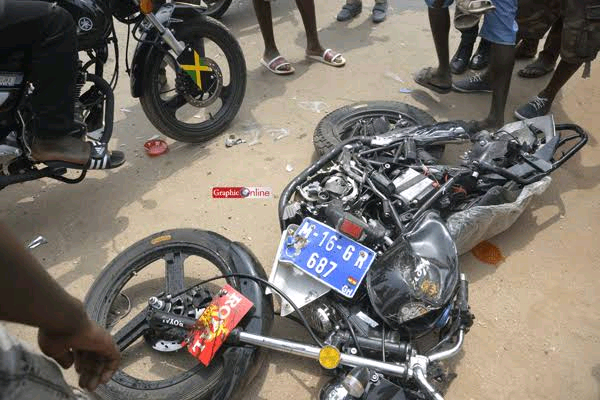
Authorities also raised concerns about the growing use of motorbikes and scooters, particularly among young and inexperienced riders. Many operate without licenses and ignore basic safety rules, including helmet use.
“It is illegal to ride without a license, even if you are 18 or above,” the PRO John Quarshie said. “But enforcement has been relaxed, and people are taking advantage of that.”
Officials said riding under the influence of alcohol and drugs is another major contributor to accidents, especially at night. They noted that many drinking spots are located close to roads, making it easy for intoxicated patrons to ride immediately after consuming alcohol.
“The law is clear, if you are under the influence, you should not even attempt to ride,” said the PRO, John Quarshie. “Even attempting to drive or ride while intoxicated is an offense.”
Authorities also highlighted dangerous practices during social events such as funerals, where young riders often engage in reckless displays on the road.
“That is not the place for showing skills,” the regional head Eric Anokye Fordjour said. “The road is not for merrymaking.”
Pedestrian safety is another growing concern, with officials warning against the misuse of walkways by both riders and traders. Riding or selling on pedestrian paths is illegal and increases the risk of knockdowns.
To address these challenges, the NRSA said it is intensifying education campaigns, increasing collaboration with police, and reviving district road safety committees to improve local enforcement.
However, officials acknowledged that changing behavior remains difficult.
“Sometimes people don’t listen, even after repeated education,” Osei Kwarteng said. “But if even one person changes and follows the rules, it makes a difference.”
Authorities are urging the public to take personal responsibility for safety, stressing that compliance with traffic laws is essential to saving lives.