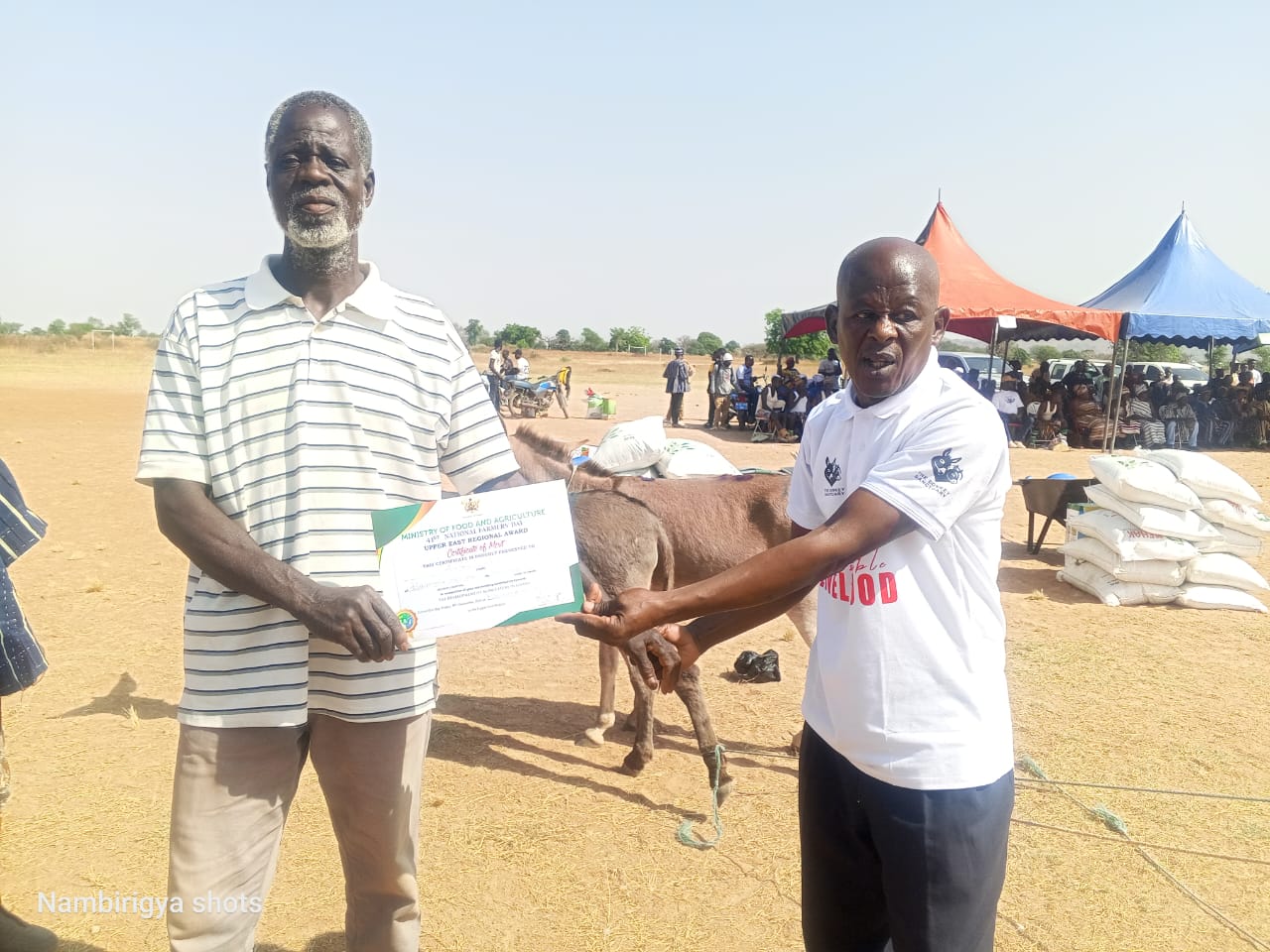
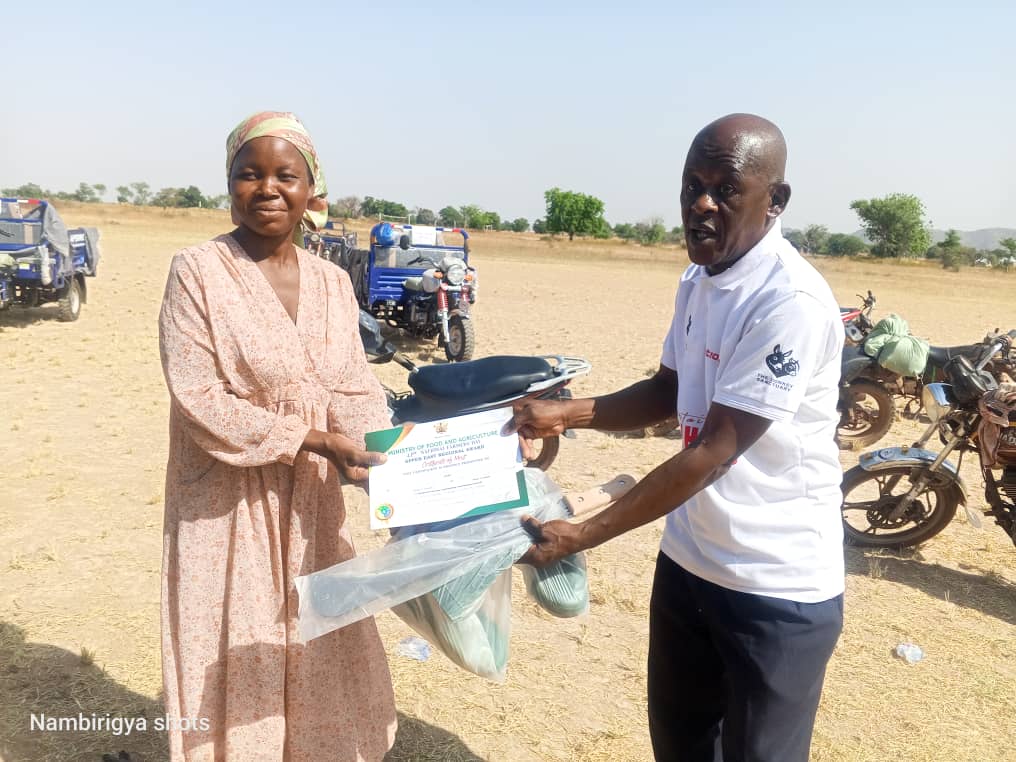
Six outstanding donkey farmers from the Bongo District, Bolgatanga Municipality, and Kassena Nankana West District in the Upper East Region have been honoured by the Ghana Poultry Network (GAPNET) and DONYEPA during the 41st Regional Farmers Day Celebration.
The award initiative forms part of ongoing efforts by GAPNET and DONYEPA, with funding from Brooks West Africa, to recognize and motivate members of the donkey value chain who have consistently worked to protect and preserve donkeys from extinction through dedicated nurturing and care.
As part of the award package, each beneficiary received a donkey, a pair of Wellington boots, and a cutlass.
The awardees include Akaribo Agemba and Anyansi Agana from the Bolgatanga Municipality; Atambila Doris Atampoka and Abangre Atanga from the Bongo District; and Aberinga Felicia and Nsoh Anyoka from the Kassena Nankana West District.
In recent years, GAPNET has intensified advocacy against the mass slaughter of donkeys for their hide—an activity the organization fears could drive the species into extinction due to rising demand. Through sustained engagements with local authorities, several donkey slaughter centers have been shut down, including some in the North East Region. Similar engagements continue in the Upper East Region, with the most recent involving the Upper East Regional Minister, Donatus Akamugri Atanga, following the relocation of some operators to the region.
To further protect the donkey population, GAPNET has partnered with the Department of Agriculture under the Ministry of Food and Agriculture to introduce the District Best Donkey Farmer Award, aimed at encouraging responsible care and safeguarding of the species.
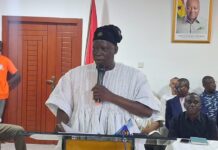
Speaking to Dreamz News on the sidelines of the Regional Farmers Day event held on Friday, December 5, 2025, Prof. Roger Kanton, National Advocacy Officer for the Fight Against Donkey Extinction, emphasized the importance of the award scheme.”We gave this award to encourage our donkey network partners so that they will take the rearing of donkeys more seriously and that is why we have given six farmers six donkeys from our network. Last year we also gave to other members of the network. Instead of only talking about stopping the mass slaughter of donkeys, we should also think about multiplying production.” He said.
He noted that donkeys play significant economic and social roles in many households, making their protection vital.
“Donkeys are so special and are virtually like pets and in the average home in the Upper East Region, donkeys help in haulage, transportation, ploughing and recently the Minister told it is occasionally used as dowry and I want to admonish the farmers to protect their donkeys, feed and properly house them.”