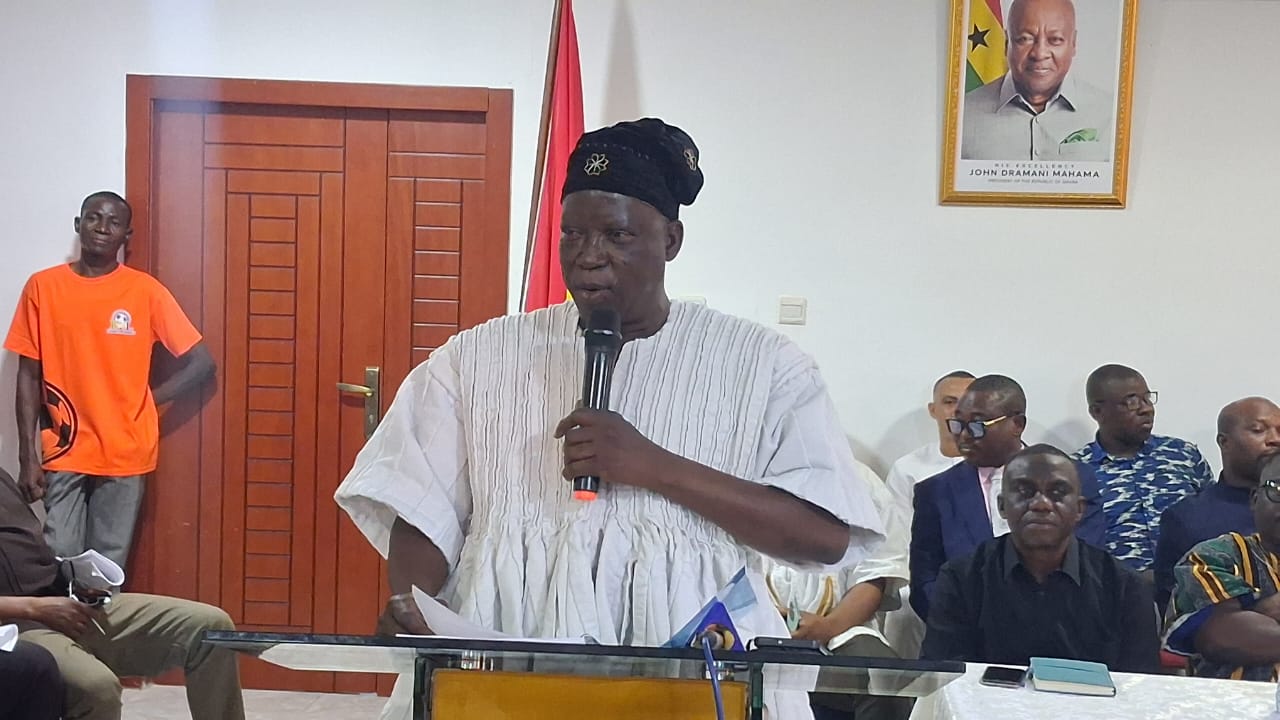
The Upper East Regional Minister, Donatus Akamugri Atanga, has announced that about 3,000 people in the region are expected to benefit from the government’s Nkoko Nkitinkiti Programme as the policy is being rolled out nationwide.
He made this disclosure on the sidelines of an agriculture stakeholders’ meeting on the programme held on Friday, noting that the Upper East Region is strategic and well-suited for livestock and poultry farming.
The Minister called on the District Chief Executives and agriculture officers to ensure that selected beneficiaries put the necessary infrastructure in place to ensure the smooth implementation of the initiative.
The Nkoko Nkitinkiti Programme is a poultry farming initiative aimed at increasing domestic production of poultry meat and eggs.
It seeks to support both smallholder and commercial poultry farmers, strengthen local hatcheries, feed production and veterinary services, and promote value addition, processing and improved market access.
Government also hopes the programme will create jobs—particularly for the youth and women—while improving household nutrition and food security.
Implementation will follow a phased approach, beginning with the registration of beneficiary farmers across districts. Support will include day-old chicks, feed, vaccines, extension services, capacity building, market linkages, and collaboration with financial institutions to enhance access to credit.
Mr. Akamugri disclosed that the programme will initially start with 100 farmers from each of the 15 districts and municipalities, bringing the first phase to 1,500 beneficiaries, followed by a second phase involving another 1,500 farmers.
“Livestock and poultry development occupies a critical place. Ghana’s poultry sector has for decades suffered from neglect, unfair competition from imports, high production costs, weak value chains, and limited access to finance and veterinary services. As a result, local poultry production has declined sharply, leading to excessive dependence on imported frozen chicken and the loss of jobs and income, particularly among the youth and women.”
He called on traditional authorities, farmer associations, private sector players, development partners and financial institutions to play critical roles in the successful rollout of the initiative.
“Traditional Authorities to support land access and community mobilization, Farmer Associations and Cooperatives to organise members and uphold standards, Private Sector Actors to invest in feed, processing, storage, and marketing, Development Partners and NGOs to align their interventions with this policy, Financial Institutions to develop tailored products for poultry farmers. Let us approach the Nkoko Nkitinkiti Policy not as a project, but as a collective regional initiative aimed at transforming lives.”
He also encouraged persons with disabilities to register, assuring that measures would be taken to ensure inclusiveness in the programme.