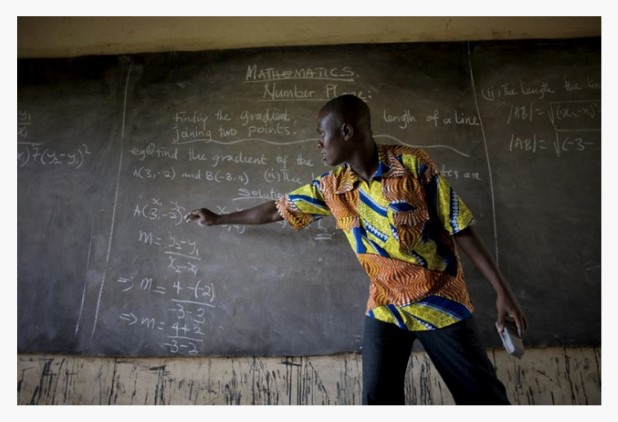
Former Upper East Regional Minister and university lecturer Professor Avea Nsoh has called on the government to adopt what he described as “creative and radical” policies to tackle rising unemployment among trained teachers in Ghana.
Speaking on Dreamz FM’s “Breakfast Today” program with host James Nana Tsiquaye, Nsoh argued that Ghana already has enough trained teachers to fill classrooms across the country but lacks a deliberate employment strategy to absorb them.
“We have all the teachers to fill the classrooms,” he said. “The problem is that we are not creating the vehicle to employ them.”
Nsoh said youth unemployment in Ghana remained alarmingly high, estimating it at nearly 30%, despite official figures being lower. According to him, thousands of trained graduates are left unemployed annually while schools continue to face staffing shortages.
He criticized what he described as Ghana’s reliance on “neoliberal economic policies” and excessive focus on macroeconomic indicators such as inflation and debt ratios at the expense of citizens’ welfare.
“We should look at the people and not just economic figures,” he said.
The former regional minister proposed the creation of a special government-backed employment vehicle that would recruit graduates yearly into temporary or transitional public service roles, including teaching positions.
Under the arrangement, he suggested graduates could initially receive modest stipends ranging between GH¢1,500 and GH¢2,000 while awaiting permanent employment opportunities.
Nsoh argued that such a system would reduce hardship among graduates and help maintain productivity among trained professionals.
“People just want something to survive on while they wait for regular employment,” he said.
He also called for stronger investment in technical and vocational education, saying Ghana must shift attention from what he termed “white-collar jobs” to practical skills training.
“We need more blue-collar jobs,” Nsoh said, adding that vocational skills such as carpentry, welding, hairdressing and painting could provide sustainable livelihoods for many young people.
He urged the government to redesign educational curricula to align with employment realities and industrial needs.
The lecturer further argued that Ghana could fund such interventions if public resources were managed efficiently and waste reduced across state institutions.
He maintained that unemployment among graduates posed a long-term social risk if not urgently addressed.
“If we continue like this every year, we are only increasing the problem,” Nsoh warned.