
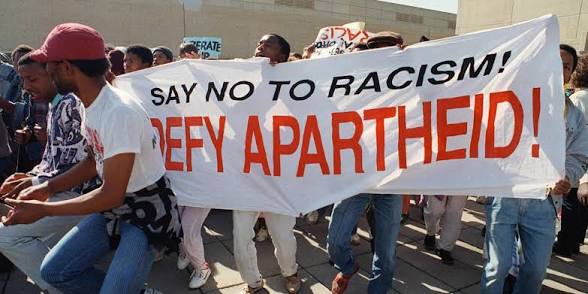
A legal scholar has warned that rising tensions between South Africans and other African nationals reflect deeper economic inequalities and long-standing structural challenges left unresolved since the end of apartheid.
Ogochukwu Nweke, a law lecturer and alternative dispute resolution practitioner, said frustrations among Black South Africans who form the majority but remain economically disadvantaged are fueling hostility toward migrants from other African countries.
“This has been a long time coming,” Lawyer Nweke said in a radio interview. “It is a manifestation of issues that have not been addressed since the end of apartheid.”
He argued that while political power shifted after the dismantling of Apartheid, economic empowerment for many Black South Africans lagged behind, leaving them at the “base of the food chain” in terms of access to jobs and opportunities.
According to Lawyer Nweke, migrants from countries such as Ghana, Nigeria and Zimbabwe often compete for low-skilled jobs, sometimes accepting lower wages, which intensifies resentment among locals.
“For a job that a South African may demand higher pay, a foreign national may accept far less,” he said, describing the situation as a “battle for survival.”
He also linked the tensions to broader economic pressures, including unemployment and inequality, as well as perceptions that migrants contribute to crime,claims he said are often generalized but widely believed.
Lawyer Nweke said the situation underscores the need for African leaders to intervene through dialogue and policy coordination, urging institutions like the African Union to mediate and promote cooperation.
He called for a renewed commitment to pan-African ideals, including economic collaboration and shared development, warning that continued divisions could undermine regional integration efforts.