
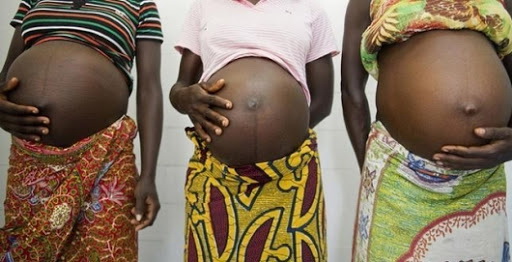
The Ghana Education Service (GES) in the Upper East Region has described its school re-entry policy as a success, following the participation of pregnant girls and lactating mothers in the 2025 national examinations.
A total of 84 pregnant girls and 46 lactating mothers sat for the 2025 Basic Education Certificate Examination (BECE) in the region. Similarly, 111 pregnant girls and 135 lactating mothers participated in the 2025 West African Senior School Certificate Examination (WASSCE).
According to GES, these milestones highlight the positive impact of the re-entry policy, which enables pregnant girls to continue their education and allows young mothers to return to school after childbirth.
The policy, officially known as the Prevention of Pregnancy Among School Girls and Facilitation of Re-entry into School after Childbirth, is designed not only to reduce teenage pregnancy but also to ensure that affected girls are not denied access to education.
The Upper East Regional Gender Desk Officer of GES, Rita Mbama, noted that the number of beneficiaries who participated in both BECE and WASSCE demonstrates the policy’s effectiveness.
“So the BECE that we wrote in 2025, we had 84 pregnant girls and then 46 lactating mothers writing the BECE. One will say that this is too high and I shouldn’t say it’s an achievement. It is not that we want the girls to get pregnant but the fact that they still stayed in school and have written these exams and have completed school. I believe that many of them will pass and continue further. Previously, if you became pregnant, you were dismissed outright. It isn’t that girls were not getting pregnant, they were getting pregnant anyway, without the policy.But if you got pregnant, and you were dismissed. Many of the girls who got pregnant will just run away from school themselves. Those who we found to be pregnant were dismissed outrightly.
So because of this, many of the girls were involved in abortion. Some of them, they go through the right method to abort by going to the hospital, some of them do crude abortion, what they want to stay in school and the school would dismiss them.So many of them were doing abortion and they were dying. Some were getting complications; others were dropping and marrying without a certificate.” She stressed.
Madam Abamah also dismissed claims that the policy encourages an increase in teenage pregnancy, stressing that its primary goal is to support girls in continuing their education despite challenges.