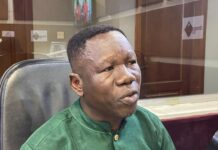

The Bolgatanga Central Constituency Secretary of the New Patriotic Party has defended the role of politicians in helping constituents secure jobs and opportunities, describing it as a practical response to limited national resources.
Richard Abagna, known as Abaska, said political intervention in employment and scholarships often fills gaps created by intense competition and insufficient openings in public institutions.
“It’s a competition,” Mr Abagna said during an interview on Dreamz FM’s “State of Our Nation.” “We don’t always have enough opportunities for everyone, so when chances come, politicians help connect people.”
His remarks come amid ongoing public debate in Ghana about political influence in job placement, particularly in sectors such as education, security services and public administration.
Mr Abagna rejected the view that such involvement undermines fairness, arguing instead that it reflects the realities of a developing economy.
“If your party is in government and opportunities come, you have to support your people. That is part of representation,” he said.
He cited his own record, saying he has assisted individuals in securing positions as teachers and police officers, as well as helping students obtain scholarships.
Critics, however, argue that reliance on political connections weakens institutional processes and disadvantages equally qualified candidates without such links.
Mr Abagna acknowledged concerns about systemic fairness but maintained that until structural limitations are addressed, political actors will continue to play a role in facilitating access.
Ghana, like many developing countries, faces high demand for limited formal employment, particularly among young graduates, making job placement a politically sensitive issue.
Mr Abagna said broader reforms are needed to expand opportunities and reduce pressure on political networks, but emphasized that, in the meantime, constituency leaders are expected to advocate for their supporters.
“It’s about helping people within the system that exists,” he said.