The Upper East Regional Minister, Hon. Akamugri Donatus Atanga, has defended the need for a new regional development framework, saying existing development plans have not positioned the region where it ought to be despite several interventions over the years.
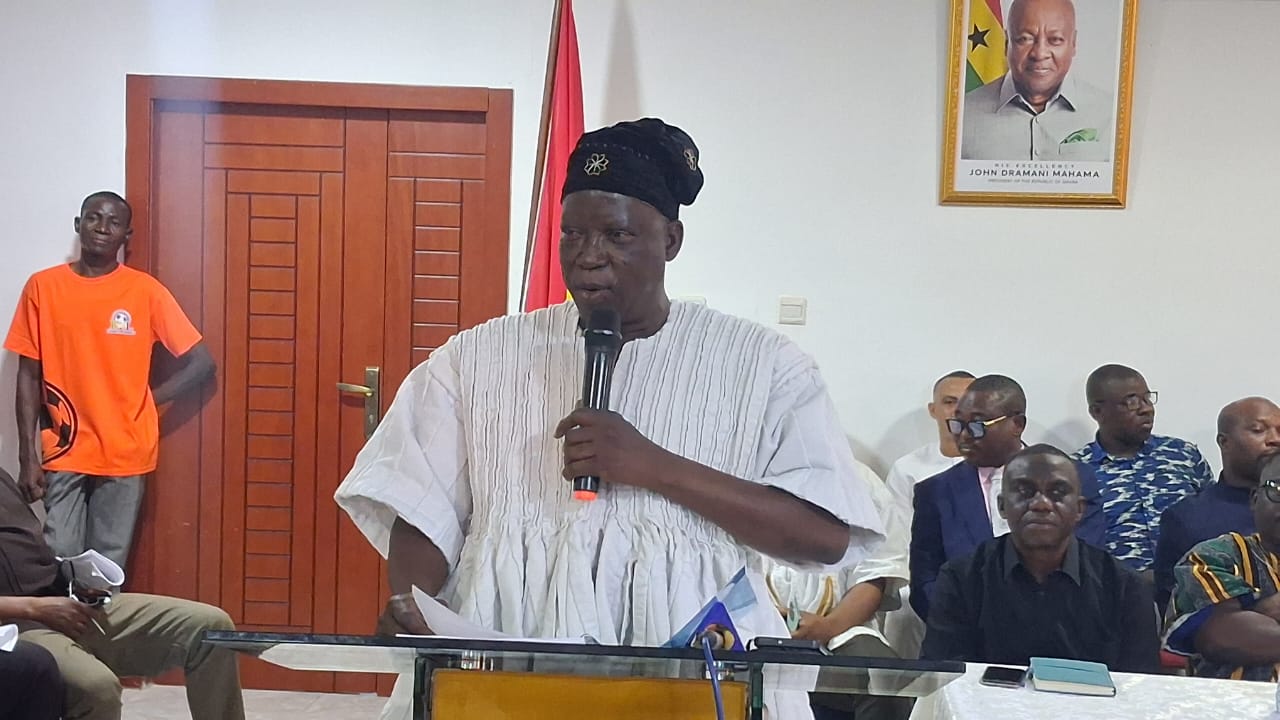
Speaking during a meeting with the Upper East Regional branch of the Association of Ghana Industries (AGI) in Bolgatanga on Monday, the Minister said the newly developed framework, Prosperity through Enterprise, Agriculture and Regional Livelihoods (PEAL), seeks to bridge gaps in previous development plans and provide a clear roadmap for the region’s growth.
According to him, the region has benefited from various development initiatives in the past, including policy plans, the Savannah Accelerated Development Authority (SADA) programme and the Northern Development Authority’s development framework. However, he noted that these interventions have not fully delivered the desired transformation.
“This programme has come about not because there were no development plans for the region. But all those frameworks have not positioned the Upper East Region where it ought to be,” he said.
The Minister explained that extensive studies were conducted on existing development documents to identify weaknesses and missing linkages, which have been addressed in the PEAL framework.
He also rejected suggestions that the region should rely solely on existing plans, stressing that development frameworks must evolve to respond to changing circumstances.
“Society is dynamic and frameworks for development are living documents. When situations change, there is the need to update those documents to respond to the changing realities,” he stated.
Hon. Akamugri highlighted three key opportunities that could drive the region’s development, namely agriculture, mining and the border economy.
While the Upper East Region has traditionally been known for agriculture, he noted that mining has emerged as a major economic sector. He further pointed to the largely untapped potential of the border economy, describing it as a major investment opportunity.
He said with about eight border districts, improving border infrastructure and trade routes would promote international trade and expand markets for local businesses and industries.
The Minister added that the PEAL framework seeks to strengthen the border economy and improve linkages between the mining sector and other sectors such as agriculture, education and health.
He said the ultimate goal is to build a diversified and sustainable economy that will continue to benefit residents even after the region’s mineral resources are exhausted.
For their part, the Association of Ghana Industries commended the Regional Minister and the Regional Coordinating Council for efforts aimed at accelerating economic growth in the region.
The Association, which represents 119 registered companies in sectors including agribusiness, manufacturing and tourism, cited high electricity tariffs, expensive raw materials, limited access to affordable credit, poor road infrastructure and competition from cheaper imports as some of the major challenges facing businesses.
AGI welcomed preparations towards the 2026 Upper East Regional Development and Business Forum and expressed support for the government’s 24-Hour Economy programme.
The Association also proposed the establishment of a structured Public-Private Dialogue Platform and called for stronger collaboration with institutions such as GEXIM Bank, Development Bank Ghana and the Ghana Enterprises Agency to improve access to financing for businesses.
AGI pledged its support for the region’s development agenda, saying collaboration between government and the private sector would help position the Upper East Region as a leading destination for agribusiness, industry, trade and investment.