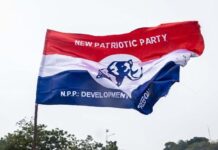

Former New Patriotic Party parliamentary candidate Rex Asanga has attributed the party’s declining performance in the Bolgatanga Central constituency in the 2024 elections to voter apathy, entrenched party loyalty and broader national political trends.
The National Democratic Congress retained the seat, with incumbent Isaac Adongo increasing his vote count to 35,101, representing 69.41%. The NPP candidate, Elvis Atiah Awaneka, secured 15,470 votes, a drop from the party’s 2020 performance.
Mr Asanga said the results reflected a nationwide shift against the ruling party at the time.
“There was a general climate for change across the country,” he said. “It affected both presidential and parliamentary results.”
He added that some party supporters were disillusioned after failing to benefit from the party’s time in government.
“People sacrificed and worked hard when the party came to power, but many felt they did not receive what they expected,” he said.
Mr Asanga also criticized what he described as a “religious” attachment to political parties in the Upper East Region, arguing that such loyalty discourages accountability.
“People vote for the party regardless of performance,” he said. “That has affected development because elected officials feel less pressure to deliver.”
He pointed to the lack of coordinated advocacy among Members of Parliament in the region, contrasting it with what he described as a more unified approach in neighboring Upper West Region, which he said has accelerated development in its regional capital.
Looking ahead, Mr Asanga called for structural reforms within the NPP, particularly at the grassroots level.
He urged the party to strengthen its polling station and constituency structures by selecting committed and capable individuals rather than loyalists chosen for internal political advantage.
“The reorganization must focus on the right people who can mobilize effectively,” he said.
Mr Asanga also acknowledged the role of political messaging, saying the party needed to improve its communication strategy to counter opponents.
“We are not strong in propaganda, and that affects how people perceive us,” he said. “We need strategies to address that.”
Despite the setbacks, he expressed optimism that the party could become more competitive in future elections if it addresses its internal challenges and reconnects with voters.