
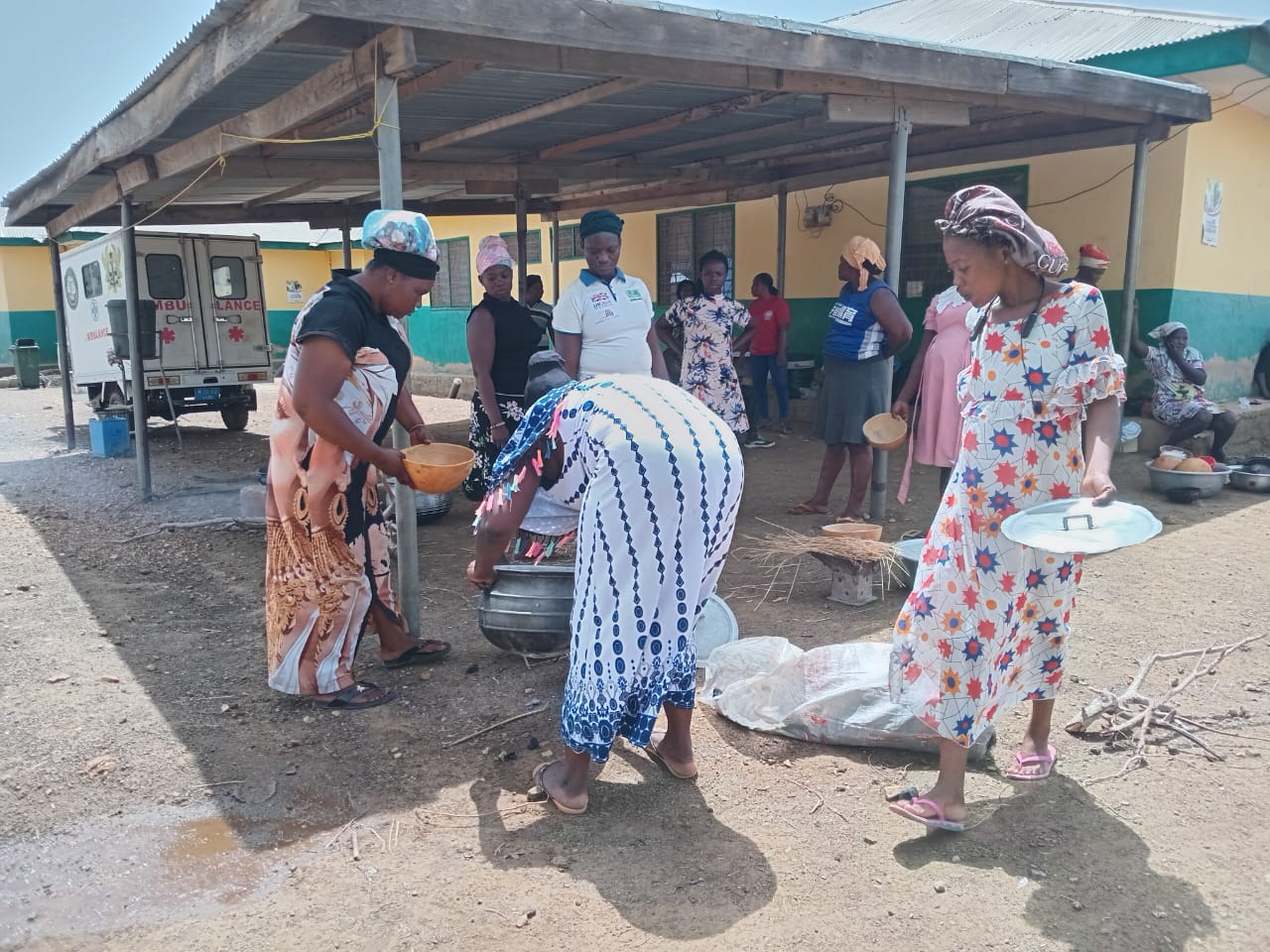
A community nutrition campaign by the Widows and Orphans Movement is beginning to influence cooking habits among women in Ghana’s Upper East Region, as participants report adopting healthier food preparation methods and reducing reliance on processed ingredients.
The initiative, being implemented in several communities including Sakote, Gane-Asonge and others , is aimed at reviving indigenous foods while improving household nutrition through training and practical cooking demonstrations.
At a second-day engagement in Gane-Asonge, participants prepared traditional dishes such as Tubaani (Gaare) and Sagkene, accompanied by local soups made from leafy vegetables, as part of efforts to promote the use of locally available ingredients.
Bugbon Vida, a participant from the community, said the training had introduced significant changes to how families prepare food at home.
“What we are doing here is helping us to change,” she said. “We have been cooking in the house, but it is different from what we have learned here.”
She noted that one of the key lessons was reducing the use of seasoning cubes in cooking.
“We are taking a lot of seasoning in the house, but here we have learned that without it, we can still cook and eat, and it will help our body,” she said.
Participants were also trained on proper food handling techniques, including washing vegetables before cutting them, a practice Vida said was not commonly followed in many households.
“We used to cut before washing, but now we know we have to wash first,” she said.
The training further emphasized shorter cooking times to preserve nutrients, as well as discouraging the use of certain additives considered unhealthy.
The Gane-Asonge engagement forms part of a broader campaign by the Widows and Orphans Movement, in partnership with the Ghana Health Service, to reintroduce indigenous foods and educate communities on their nutritional value.
Program organizers say the initiative, already rolled out in multiple communities, is helping to shift perceptions about traditional diets while promoting healthier lifestyles.
Earlier sessions in Sakote saw women highlighting the importance of returning to locally grown foods such as millet, bambara beans and leafy vegetables, with concerns that increasing reliance on processed and imported foods is affecting nutrition.
The campaign is expected to continue across other communities, with organizers aiming to strengthen household nutrition while preserving indigenous food knowledge and seeds.